

Last updated: June 13, 2025
Have you ever wondered about the tiny holes in plane windows, the in-flight entertainment on the first flights, or perhaps the amount of caviar people eat while flying?
We’ve researched and collected a trove of curiosities and impressive facts about air transport. Among the usual biggest, fastest and furthest, you’ll also find out about the requirements for flight attendants in the early days of air travel, a successful hijacking and why aeroplane food is somewhat tasteless.
If your guess is New York — London, you are far from the truth, the record holders don't travel to Europe or the USA.
In fact, the busiest international route is Hong-Kong — Taipei, Taiwan: almost 6.8 million passengers travelled between the two Asian destinations in 2024, which is 48% more than the year prior.
According to OAG, the busiest domestic flight route is in South Korea between Jeju to Seoul Gimpo with more than 14.2 million passengers (around 39,000 seats every day).
In fact, a second airport is expected to open in 2025 in the nearby city of Seoul to meet the ever-growing number of passengers.
Although quite impressive, this long-distance commercial flight speed is far below the record held by the Lockheed Blackbird, which reached 3,529 km/h (2,193mp/h) in 1976.
Outer space (the so-called Kármán line) lies at an altitude of 100 km, which means you are flying at 0.1 on the trajectory to space (and about 0.000026 the distance to the Moon).
This is colder than the average winter temperature of -50 °C at the coldest permanently inhabited place on earth — Oymyakon, Russia.
Despite, the general understanding about air traffic pollution, air transport accounts for only 2% of human’s annual CO2 emissions. Data shows that planes today are 70% more fuel efficient than the first jets.
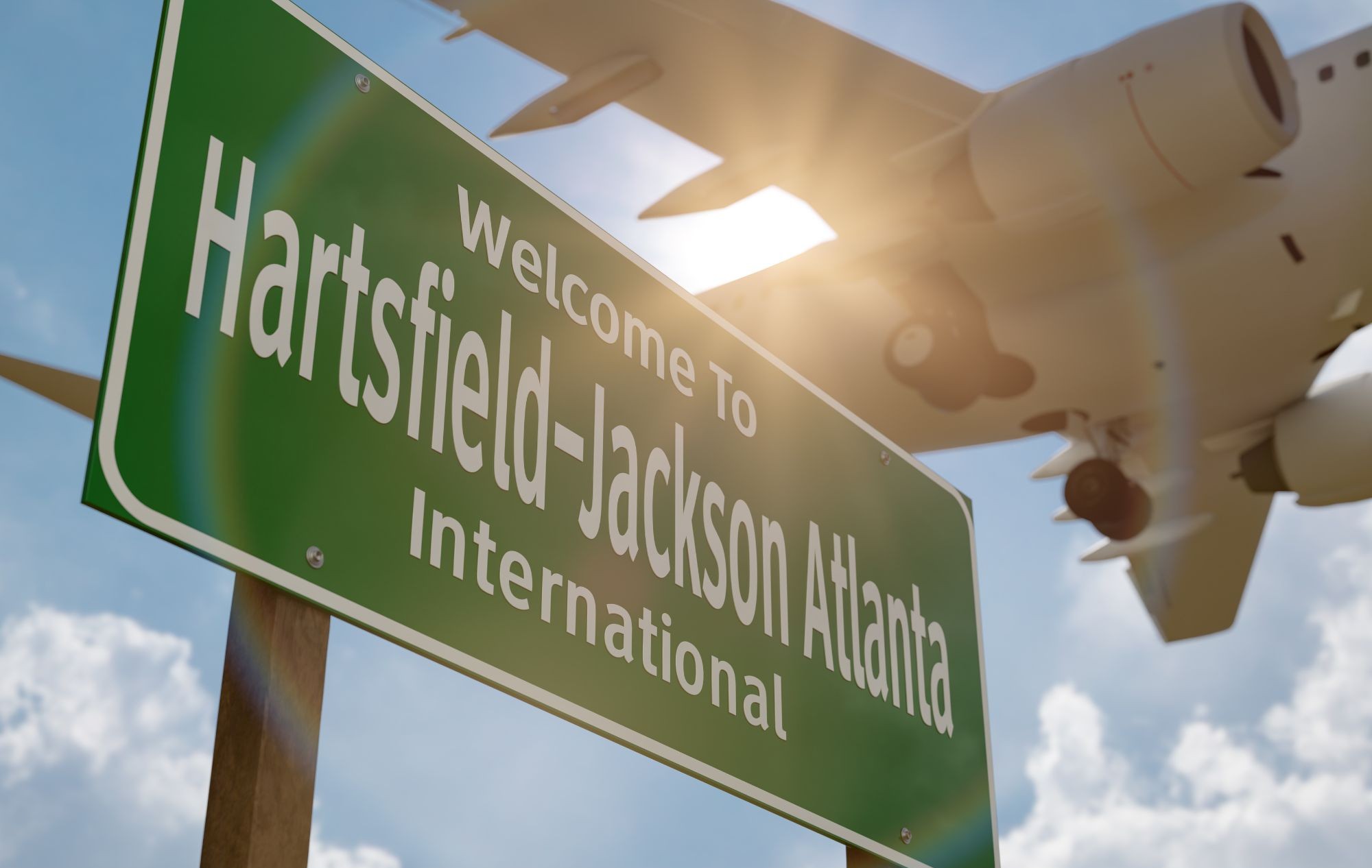
295,000 passengers take-off or land at the one of the biggest airports in the world every day — imagine the whole population of Gibraltar gathered in a single airport building.
The airport elevated at 4,411m above sea level is among several of the highest altitude airports located in the Tibetan Autonomous Prefecture (seven of the top ten in the world are in China!)
Data shows that the odds of dying in a plane crash are 1 in 11,000,000, which is genuinely impressive when compared to 1 in 5,000 for car accidents.
The goal is to minimise the risk of food poisoning — all for your safety!
Initially, flight attendants had to be unmarried, trained nurses, and they also had to weigh less than 52 kg!
FAA requirements are based on data that shows it takes less than a minute and a half for fire to spread and engulf the plane.
So, next time you get on that plane, it might be a good idea to look around and find the nearest emergency exit, better safe than sorry!
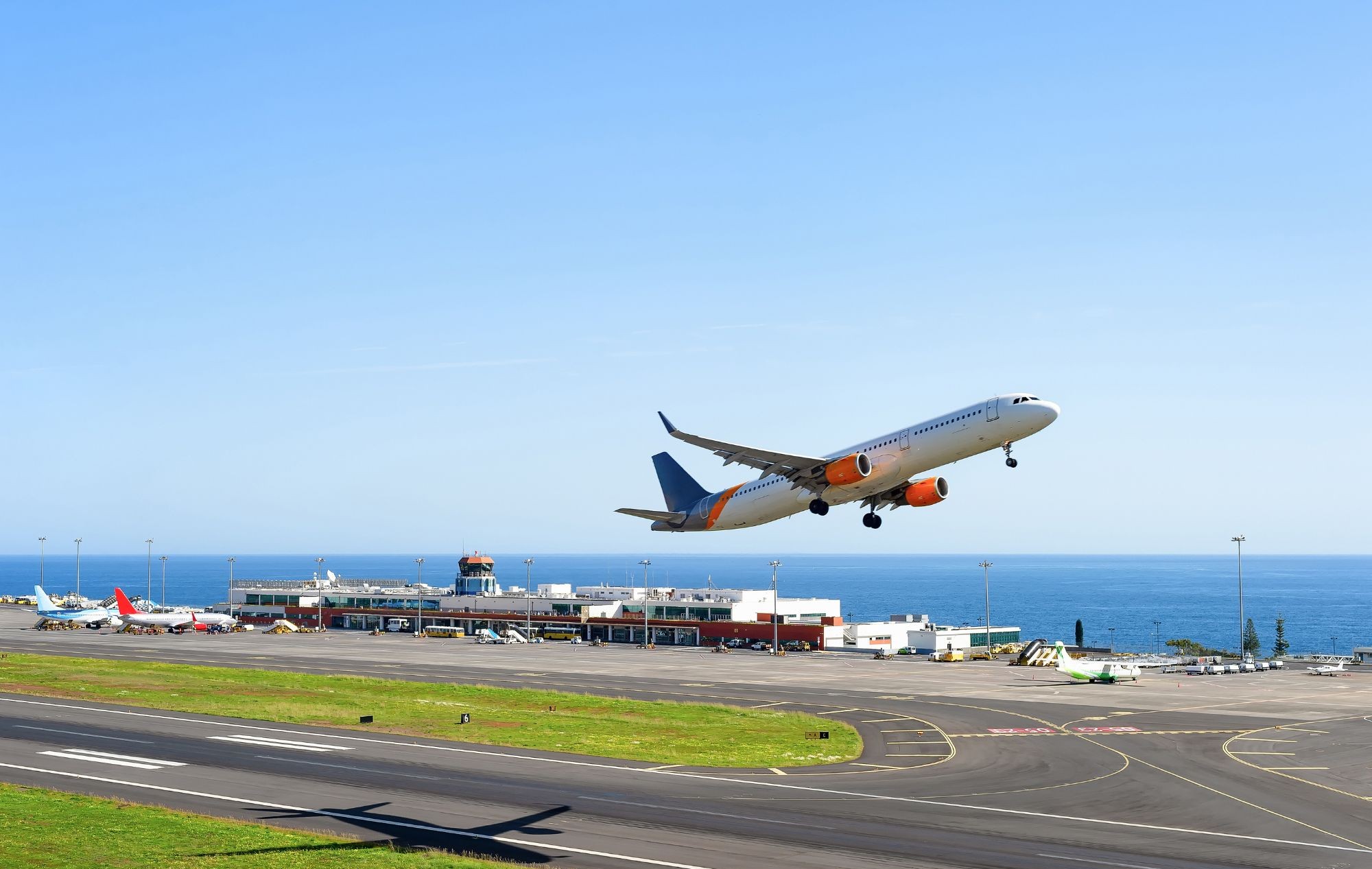
The first 3 minutes after take-off and the last 8 minutes before landing seem to be the riskiest — this is when 63% of plane crashes happen.
The windscreen (window frame) of a cockpit of a Boeing 747-400 reportedly costs as much as a BMW (no wonder airlines lease aircraft)!
And although you may be certain that the hospital-quality air filters will catch almost all air-borne microbes, you should wipe that seat-back tray before you use it. Reports indicate that this is the dirtiest place in a plane (research detected 8 times more bacteria than on the toilet flush button!).
In 1999, the airline operating in the northernmost US state broke ground and today, just 20 years later, we take it for granted. Almost all airlines offer online check-in service 24h to 60 min before flight.
Chuck Yeager flew on his rocket-powered Glamorous Glennis at 13.7 km altitude, reaching Mach1.06 or 1,299 km/h.
Reportedly, back in 1989, American Airlines, the largest US operator, saved the money simply by removing one olive from the salads served to passengers in first class.
A Boeing 747 is reported to consist of 6 million parts, 274 km of wiring and 8 km of tubing (it’s almost scary how many parts can break and how skilful mechanics need to be to fix them!).
The first recorded incident dates back to 1931 and over 1000 planes have been hijacked since.
Yet, the most impressive high jacking happened in 1971 when D.B.Cooper held passengers of a Northwest Orient Airlines plane hostage and successfully got $200,000 ransom. He also managed to get a parachute that helped him escape — he jumped out of a rear door and was never found.
The long-haul flight operated by Singapore Airlines travels the amazing distance of 15,300 km in roughly 18.5 hours.
But soon it might have competition. By 2027, Qantas intends to launch a flight between Sydney and London which will cover a journey of 17,015 km in around 20 hours.
In 2006, British PM Tony Blair flew on a record BA flight — the 17,157 km journey took him and his entourage of staff and journalists from meetings in Brussels to the closing ceremony of the Commonwealth Games in Melbourne.
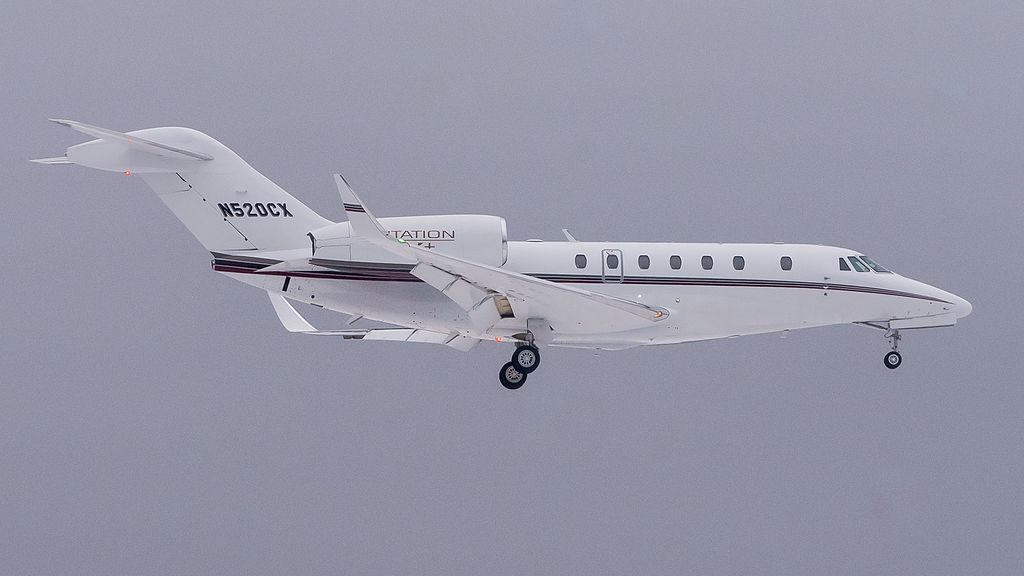
This superfast jet can take 12 passengers across a range of 6,410 km with a speed of Mach 0.935 or 993 km/h.
The Etihad Airways flights feature a double bedroom suite, your personal butler and a chef to cook exquisite meals just for you!
This is the price for a round trip between New York and Hong Kong on a Lufthansa flight, featuring Michelin starred meals and a standalone seat and bed set up.
The country's flag carrier, Singapore Airlines, is reported to spend about $700 million on food and $16 million on wine.
Flying back in 1936 on the airship Hindenburg meant you could enjoy a piano lounge, a dining room, a smoking room and a bar on your 2-and-a-half-day trip between Europe and America.
You may be surprised, but the winner here is Turkish Airlines, serving 123 routes, all thanks to the country’s location at a crossroads between Europe, Asia, and Africa.
If you hate flight delays, you should book a flight with Mexico's top airline. According to Cirium, an aviation analytics company, 86.70% of Aeromexico's flights arrived on time in 2024.
The German flag carrier is the world’s largest purchaser of caviar, so if you’re looking for luxury, choose Lufthansa for the caviar and Singapore Airlines for the champagne.
The first airline to offer a separate fare for its business class was the Australian flag carrier Qantas.
So, after all, the reason for the bland plane food is not the airline but your sensitivity, which is affected by the pressure and dry air.
The first aircraft windows were rectangular, but the extra stress in the corners lead to cracking and accidents. The hole you have seen is there to balance air pressure.
 English (UK)
  English (US)
  Deutsch
  Français
  Español
  Italiano
  Ελληνικά
  Български
  Srpski
  Português
  Türk
Türk  Русский
  Polski